Explore How Furnace Features Affect Your Total Cost
Understanding How Additional Furnace Features Affect Your Total Cost: A Comprehensive Guide to Furnace Features Cost Breakdown and Pricing
Upgrading or replacing a furnace often involves choices that go far beyond the sticker price of the unit, and this guide explains exactly which additional features change your total cost and why those choices matter. Readers will learn which baseline factors set the starting price, how efficiency upgrades alter both upfront expense and long-term savings, and which blower, control, and indoor-air-quality add-ons deliver measurable comfort or health benefits. The article defines each feature, explains the mechanism behind its value, and walks through practical examples and payback reasoning so homeowners can make cost-effective decisions. You will also find practical comparison tables, lists that highlight trade-offs, and local-service context to help translate features into actionable installation choices in the Mundelein, IL area. First we establish baseline cost drivers, then analyze efficiency and blower technologies, cover smart controls and zoning, review IAQ add-ons, and finish with the installation, warranty, and maintenance considerations that materially affect your final investment.
What Core Factors Influence the Total Cost of a Furnace Beyond Features?
A furnace’s baseline cost depends on core factors that set a price floor before optional features are added: fuel type, unit size (BTU capacity), brand tier, and the local installation environment including labor and permits. These factors determine both equipment selection and the likely scope of installation work, which in turn shapes the total project budget. Understanding baseline cost drivers helps you evaluate whether an efficiency or comfort upgrade will push you into higher labor, permit, or ductwork requirements. The next section breaks down how fuel type and sizing influence upfront cost and installation complexity so you can see the practical implications for budget and operation.
Different baseline choices deliver distinct cost and complexity implications:
- Fuel choice influences both unit price and operating costs: gas vs electric vs propane have different equipment and venting requirements.
- Sizing determines equipment cost and installation scope: higher-BTU models cost more and may require duct or vent upgrades.
- Brand tier affects warranty and perceived reliability: value, mid-range, and premium manufacturers offer different price/warranty trade-offs.
These baseline drivers make clear why a homeowner should evaluate the foundational choices first, because they form the context for which add-ons and upgrades are cost-effective.
How Do Fuel Type and Furnace Size Impact Installation and Price?
Fuel type and furnace size directly determine unit selection, venting and gas-line work, and sometimes electrical upgrades, making them primary cost drivers before add-ons. Gas furnaces generally cost more to install than basic electric units because they require safe venting, gas piping, and combustion clearances; however, natural gas often yields lower operating costs in suitable markets. Sizing based on accurate heat-load calculations prevents oversizing, which can cost more upfront and reduce efficiency; undersizing forces more runtime and wear, increasing lifetime operating expense. Proper sizing typically requires a Manual J load calculation and may reveal ductwork changes or distribution improvements that add to installation labor and materials. Correctly matching fuel type and size minimizes retrofit surprises and frames the marginal cost of features like higher AFUE ratings or variable-speed blowers.
These baseline installation choices connect directly to brand selection and warranty terms, which we cover next to help homeowners decide when a higher-tier unit is warranted.
Which Furnace Brands Affect Pricing and Quality?
Brands fall into tiered categories—value, mid-range, and premium—and each tier brings trade-offs in parts quality, warranty length, and dealer support that affect total cost over the system’s life. Value brands tend to minimize upfront price but may have shorter warranty terms and fewer certified dealer networks, which can increase long-term service costs. Mid-range brands balance purchase price with proven reliability and accessible replacement parts, making them common for replacements. Premium brands command higher upfront investment but often include extended warranties, advanced components, and tighter manufacturing tolerances that reduce service calls. Choosing a brand should weigh installer expertise as heavily as manufacturer reputation, because proper installation protects warranties and system longevity. The brand decision therefore influences whether spending more on features or a higher-tier unit yields genuine ROI for your home.
A practical brand-tier checklist helps homeowners prioritize installation quality and warranty coverage when evaluating price differences:
- Prioritize certified installers over low-cost brand options when warranties require professional setup.
- Choose mid-range brands for balanced value unless specific features justify premium pricing.
- Consider premium brands when long warranty terms and low service frequency offset higher upfront cost.
These brand considerations lead directly into efficiency features, where AFUE and staging choices alter both purchase price and operating cost.
How Do Efficiency Features Affect Furnace Cost and Long-Term Savings?
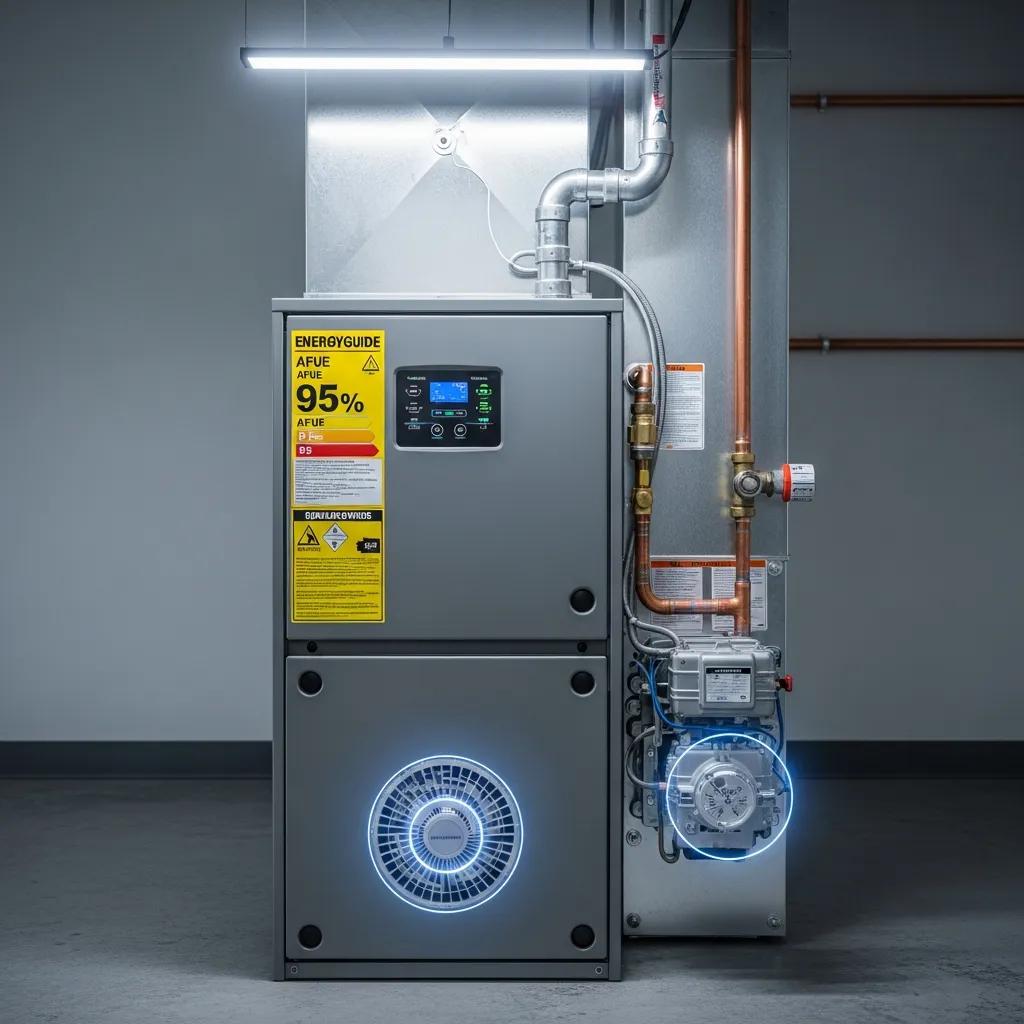
Efficiency upgrades—primarily AFUE rating and staging/modulation—raise upfront costs but reduce operating expenses; quantifying that trade-off requires simple payback math and local energy pricing. AFUE measures the percentage of fuel converted to useful heat, so higher AFUE produces lower fuel bills per unit of heat delivered, while staging and modulating furnaces reduce short-cycling and better match heat output to demand. Investing in higher AFUE or modulating technology can be especially cost-effective in climates with significant heating loads, and the incremental cost should be evaluated in light of estimated annual savings and realistic payback periods. The following table maps typical AFUE deltas to upfront cost and estimated savings to make that comparison tangible.
This EAV table ties AFUE and furnace type to the expected cost delta and operating savings.
This table shows that higher AFUE and advanced modulation increase upfront cost but can produce attractive operational savings when local fuel prices and heating hours are significant.
How Do Single-Stage, Two-Stage, and Modulating Furnaces Differ in Price and Performance?
Single-stage furnaces operate at full capacity whenever they run and are typically the lowest-cost option but can cause short-cycling and wider temperature swings. Two-stage furnaces offer a lower-output stage for common conditions and a higher-output stage for extremes, improving comfort and efficiency with a moderate price premium. Modulating (variable-output) furnaces continuously adjust heat output to closely match demand, delivering the best temperature consistency, humidity control, and efficiency but at the highest upfront cost. Typical cost deltas reflect these differences: single-stage lowest cost, two-stage moderate premium, and modulating highest premium but often the best long-term comfort ROI in variable climates. Choose modulating systems when comfort control and precise humidity management are priorities and when the homeowner plans to stay in the house long enough to realize payback.
A quick comparison list summarizes which home types benefit most from each staging option:
- Single-stage: Best for tight budgets and smaller or well-insulated homes.
- Two-stage: Good for families seeking improved comfort without the top-tier cost.
- Modulating: Ideal for homes with large temperature swings, humidity concerns, or where maximum efficiency is desired.
After weighing efficiency and staging, blower choices further shape comfort and cost.
What Are ECM Motors and Their Role in Energy Savings and Pricing?
ECM motors use electronic commutation to deliver efficient, variable-speed operation, reducing motor electrical draw and improving system responsiveness relative to PSC motors.
In practice, ECMs can consume 20–50% less electricity depending on runtime and control setup, which lowers operating costs and contributes to quicker seasonal payback on the motor premium. The typical price premium for an ECM upgrade ranges from several hundred to around fifteen hundred dollars when factoring in labor and control compatibility, but the longevity and smoother operation often reduce maintenance needs over time. For homes that run fans frequently for filtration or ventilation, the energy savings compound, making ECMs a strong efficiency investment in many retrofit scenarios.
Practical installation considerations and local service capabilities inform the choice to upgrade blowers and motors, as discussed next.
After this technical discussion, homeowners may want professional assessment; local installers can evaluate ductwork interaction and control integration when considering ECM or variable-speed retrofits.
How Do Smart Controls and Connectivity Features Influence Furnace Upgrade Costs?
Smart thermostats, Wi-Fi connectivity, and zoning controls add both upfront component and installation costs while enabling dynamic energy management and improved comfort control that can reduce energy waste. Smart controls can learn schedules, use geofencing, and integrate with modulating furnace controls to optimize runtime, while zoning systems use dampers and multiple thermostats to direct conditioned air where it’s needed, reducing simultaneous heating of unused spaces. Integration complexity varies: a simple smart thermostat replacement is low-cost, but full zoning requires dampers, a zoning control board, and possible duct modifications, which increase labor and permit scope. Understanding compatibility with your chosen furnace type and blower technology is critical, because some advanced controls produce full value only when paired with variable-speed blowers or modulating furnaces.
Below are practical lists that explain typical costs and when to opt for professional integration.
Smart control benefits and compatibility checklist:
- Smart thermostat: Low hardware cost; best when professionally configured for modulating systems.
- Connectivity integration: Enables remote monitoring and energy reports; minimal hardware cost but configuration time required.
- Zoning systems: Highest installation complexity; strong ROI in multi-level or large homes.
These control choices often interact with blower and efficiency upgrades, so a coordinated design typically delivers the best long-term value.
How Do Zoning Systems Enhance Comfort and Affect Installation Costs?
Zoning uses motorized dampers and a control board to direct airflow to multiple zones, improving comfort for varying occupancy and reducing energy waste in unused areas, but it increases installation cost and disruption. Components include dampers installed in the ductwork, multiple thermostats, and a centralized zoning control panel; installation complexity depends on existing duct access and the number of zones. Typical cost drivers are ductwork accessibility, number of zones, and whether additional return pathways or booster fans are required; retrofits are more expensive than new-construction zoning. Zoning yields the highest ROI in multi-level homes or those with strong thermal imbalances, and when paired with a variable-speed blower the system optimizes airflow without unnecessary noise or short cycling.
Deciding between DIY thermostat upgrades and professional zoning installations requires evaluating duct access, desired control granularity, and compatibility with blower technology discussed earlier.
What Installation, Warranty, and Maintenance Factors Impact Your Total Furnace Cost?
Non-equipment costs and protection plans—professional installation labor, ductwork repairs, permits, warranties, and maintenance agreements—substantially influence the total investment and the long-term return on optional features.
Labor rates and permit fees vary regionally and determine the cost of tasks like venting, gas-line work, duct modification, or electrical upgrades; these items can exceed equipment premiums in complex retrofits.
Warranties come from manufacturers and installers with differing scopes and durations, and maintenance plans preserve efficiency while protecting warranty eligibility.
Financing options and service plans can spread upfront expense, but they also alter total lifetime cost.
The paragraphs below offer a checklist and discuss common warranty and maintenance choices.
A practical installation checklist clarifies common scope items that affect total pricing:
- Labor & permits: Necessary safety checks, venting certification, and local permits often add to project cost.
- Ductwork condition: Repairs or redesigns increase materials and labor significantly.
- Electrical / gas upgrades: Panel or gas-line work can be a major hidden cost in some retrofits.
These inspection items determine whether a simple replacement or a more involved retrofit is required, which then shapes warranty and maintenance decisions.
What Warranty and Maintenance Plans Should You Consider for Long-Term Savings?
Manufacturer warranties cover defects in parts and sometimes the heat exchanger, while installer warranties and service agreements often address labor, tune-ups, and priority service; combining solid manufacturer coverage with a reliable maintenance plan typically protects long-term investment.
Annual maintenance reduces efficiency losses, helps detect issues early, and often preserves warranty eligibility; maintenance plans can include biannual or annual inspections, cleaning, filter replacement guidance, and prioritized service callbacks.
Extended warranties or service contracts may be cost-effective for homeowners planning to keep the system long-term or in homes where system access increases repair complexity.
For local homeowners, working with a certified team that offers transparent maintenance packages and financing options helps translate feature choices into predictable lifecycle costs and supports planned upgrades like variable-speed blowers or zoning.
Air Kings Heating and Cooling employs NATE-certified technicians trained to evaluate duct condition, perform precision installation, and propose maintenance plans or financing options that can make higher-efficiency and comfort upgrades more accessible.
- Annual maintenance: Preserves efficiency and identifies issues early.
- Service agreements: Offer predictable costs and priority scheduling.
- Extended warranties: Worth considering if staying long-term and wanting reduced repair exposure.
These protective measures complete the decision framework for weighing additional feature costs against expected savings and comfort benefits, and they set the stage for obtaining a personalized assessment.
Air Kings Heating & Cooling’ NATE-certified team can perform detailed load calculations, duct evaluations, and a written quote that clarifies installation scope, warranty coverage, and available financing—helpful next steps for homeowners ready to convert feature decisions into a reliable installation plan.
Conclusion
Understanding the various features and their impact on furnace costs empowers homeowners to make informed decisions that enhance comfort and efficiency. By evaluating factors such as fuel type, brand, and efficiency upgrades, you can optimize your investment for long-term savings and reliability. For personalized guidance tailored to your specific needs, consider reaching out to our expert team at Air Kings Heating & Cooling. Take the next step towards a more efficient home by exploring our comprehensive services today.

Customer
Testimonials

Great service Very professional
Air Kings was very friendly from start to finish. Very professional and on time. Always communicated with me to keep me informed. I highly recommend them.
Air Kings is a breath of fresh air when working with HVAC companies. Omar was incredibly helpful and polite, offering quality customer service I’ve never seen before. Very easy to talk with Air Kings, I recommend giving them a call!
Brian was super helpful and walked me through everything super nicely as well
Very satisfied
Great service Very professional
Air Kings was very friendly from start to finish. Very professional and on time. Always communicated with me to keep me informed. I highly recommend them.
Air Kings is a breath of fresh air when working with HVAC companies. Omar was incredibly helpful and polite, offering quality customer service I’ve never seen before. Very easy to talk with Air Kings, I recommend giving them a call!
Omar & team are great HVAC experts! They explain what they are doing and are always professional. Great techs that know what they are doing and reasonable prices.


Service areas