Whole House Humidifiers in Mettawa
Whole House Humidifiers in Mettawa offer consistent winter humidity to improve comfort, protect woodwork, and support healthier indoor air. This page covers types: bypass, fan-powered, and steam units, and guidance on sizing for small to large homes, installation options, and smart controls. It also outlines maintenance steps, seasonal operation tips, energy considerations, and typical warranties. Common homeowner questions are answered, including optimal humidity ranges, mold risk, and how humidification affects floors and trim. Proper selection and upkeep maximize efficiency and lifespan.

Whole House Humidifiers in Mettawa
Winters in Mettawa bring cold, dry air that pulls moisture from indoor spaces, causing dry skin, irritated sinuses, shrinking wood trim, and static electricity. Whole house humidifiers provide consistent humidity throughout a home by integrating with the HVAC system or operating independently, solving comfort and preservation problems that room humidifiers cannot. This page explains the types of systems available in Mettawa, the benefits, how to size for different home layouts, installation and control options, maintenance and seasonal operation tips, energy considerations and warranty norms, and answers common homeowner questions specific to Mettawa homes.
Types of Whole House Humidifiers
Understanding the common types helps match a system to your home layout and HVAC setup.
- Bypass humidifiers: Use the furnace’s air handler to move warm air through a moisture panel. Low-energy, quiet, and ideal for homes with a forced-air heating system and central ducting.
- Fan-powered humidifiers: Include a built-in fan to push air through the moisture panel. More effective than bypass units at higher humidity outputs, good for larger homes or open floor plans.
- Steam humidifiers: Generate steam independently and inject it into the ductwork or living spaces. Best for precise control, very large homes, homes without forced-air heating, or where high output is required during cold Mettawa winters.
Benefits of Consistent Indoor Humidity
Maintaining recommended indoor humidity in Mettawa (generally 35 to 45 percent in winter) delivers multiple advantages:
- Comfort: Air feels warmer and less drying, reducing the need for extra layering and lowering static shocks.
- Health: Proper humidity eases respiratory irritation, reduces nose and throat dryness, and can help with seasonal cold symptoms.
- Home protection: Wood floors, trim, and musical instruments are less likely to crack or warp when humidity is controlled. Older Mettawa homes with extensive woodwork especially benefit.
- Energy efficiency: A properly humidified home often feels warmer at lower thermostat settings, which can offset some heating costs.
How to Size a Humidifier for Different Home Layouts in Mettawa
Sizing a whole house humidifier depends on home square footage, insulation and airtightness, ceiling height, and the severity of outdoor winter conditions.
- Rough capacity guidelines:
- Small homes or tight, well-insulated spaces (under 1,500 sq ft): 6 to 12 gallons per day (GPD)
- Medium homes (1,500 to 3,000 sq ft): 12 to 20 GPD
- Large homes and open floor plans (over 3,000 sq ft): 20 to 35+ GPD
- Steam systems for very large or high-demand situations: capacity measured in pounds per hour (lb/hr), often 5 to 20+ lb/hr depending on load
- Layout considerations: Multi-level homes, homes with unfinished basements, and lots with exposed windows or large glass areas may require higher capacity.
- Local climate factor: Mettawa’s cold, dry winter air increases the load. A home that is less airtight or sits on a windy, exposed lot will need a larger system.
- Final step: A humidity load calculation — factoring outdoor design temperature, desired indoor relative humidity, and building envelope — provides precise sizing. A qualified technician typically performs this calculation.
Installation and Control Options
Whole house humidification integrates with home systems in several ways.
- Integration with forced-air HVAC: Bypass and fan-powered units mount on the furnace or ductwork. Proper placement ensures even distribution across duct zones.
- Standalone steam installations: Steam units can be mounted near the duct or directly into spaces and are suitable for homes with radiant heat or no central air.
- Controls and automation:
- Basic humidistats maintain a set relative humidity.
- Digital or smart humidistats adjust setpoints automatically and can integrate with home automation for scheduling and remote monitoring.
- Zoning compatibility: Homes with multiple HVAC zones may need a central humidifier plus individual dampers or multi-unit setups to deliver even humidity.
Maintenance Requirements and Seasonal Operation Tips
Routine care keeps performance reliable and prevents problems that are often more common in colder regions.
- Regular maintenance items:
- Replace or clean the evaporative pad or water panel annually or each heating season.
- Inspect water lines and valves for leaks or mineral buildup.
- For steam units, descale or replace electrodes and clean the steam cylinder per manufacturer guidance.
- Check and calibrate humidistat for accurate readings.
- Seasonal tips for Mettawa:
- Start the humidifier at the beginning of the heating season, then adjust based on interior comfort and window condensation. Aim for 35 to 45 percent RH in winter; lower setpoints may be necessary on extremely cold days to prevent condensation.
- Shut off and winterize outdoor water lines if applicable to avoid freezing.
- Keep attic and crawlspace vents and insulation in good condition to reduce unnecessary moisture loss.
Energy Considerations and Warranty Information
Energy impact varies by system type and usage patterns.
- Energy use:
- Bypass units use minimal additional energy, relying on the furnace blower.
- Fan-powered units consume modest electricity for the integrated fan.
- Steam humidifiers use more energy to boil water, but they provide fast, precise humidity control and are often the right choice for large or high-demand homes.
- Efficiency tip: Because higher humidity increases perceived warmth, you may lower thermostat settings slightly and save heating energy while staying comfortable.
- Warranty norms:
- Typical manufacturer warranties range from 1 to 5 years on parts, with limited lifetime or extended warranties on select components in some models.
- Warranty coverage often depends on correct installation and documented maintenance, so follow manufacturer maintenance schedules to preserve coverage.
Common Questions Mettawa Homeowners Ask
- What relative humidity should I aim for in Mettawa winters?
- Aim for 35 to 45 percent. Adjust lower on very cold days to avoid window condensation.
- Will a humidifier cause mold or mildew?
- Not when installed, sized, and maintained properly. Over-humidifying and poor air circulation can create conditions for mold; controlled systems with proper settings prevent that risk.
- Can a humidifier protect my hardwood floors and trim?
- Yes. Consistent indoor humidity reduces shrinkage and cracking in wood, preserving finish and fit.
- Is steam necessary if I have radiant heat or a boiler?
- Steam or vapor-capable humidifiers are often the best fit for homes without forced-air systems, because they do not require ductwork or a furnace blower.
- How often will it need service?
- Most systems need a basic check and cleaning at least once per heating season; steam units may require more frequent descaling in hard-water areas.
Whole house humidifiers in Mettawa address winter dryness, protect wood features, and improve indoor comfort and health. Choosing the right type and capacity depends on your home’s heating system, size, layout, and local climate exposure. Proper installation, seasonal adjustments, and routine maintenance keep the system efficient and extend component life while helping avoid common problems like condensation or excess moisture.

Customer
Testimonials

Great service Very professional
Air Kings was very friendly from start to finish. Very professional and on time. Always communicated with me to keep me informed. I highly recommend them.
Air Kings is a breath of fresh air when working with HVAC companies. Omar was incredibly helpful and polite, offering quality customer service I’ve never seen before. Very easy to talk with Air Kings, I recommend giving them a call!
Brian was super helpful and walked me through everything super nicely as well
Very satisfied
Great service Very professional
Air Kings was very friendly from start to finish. Very professional and on time. Always communicated with me to keep me informed. I highly recommend them.
Air Kings is a breath of fresh air when working with HVAC companies. Omar was incredibly helpful and polite, offering quality customer service I’ve never seen before. Very easy to talk with Air Kings, I recommend giving them a call!
Omar & team are great HVAC experts! They explain what they are doing and are always professional. Great techs that know what they are doing and reasonable prices.


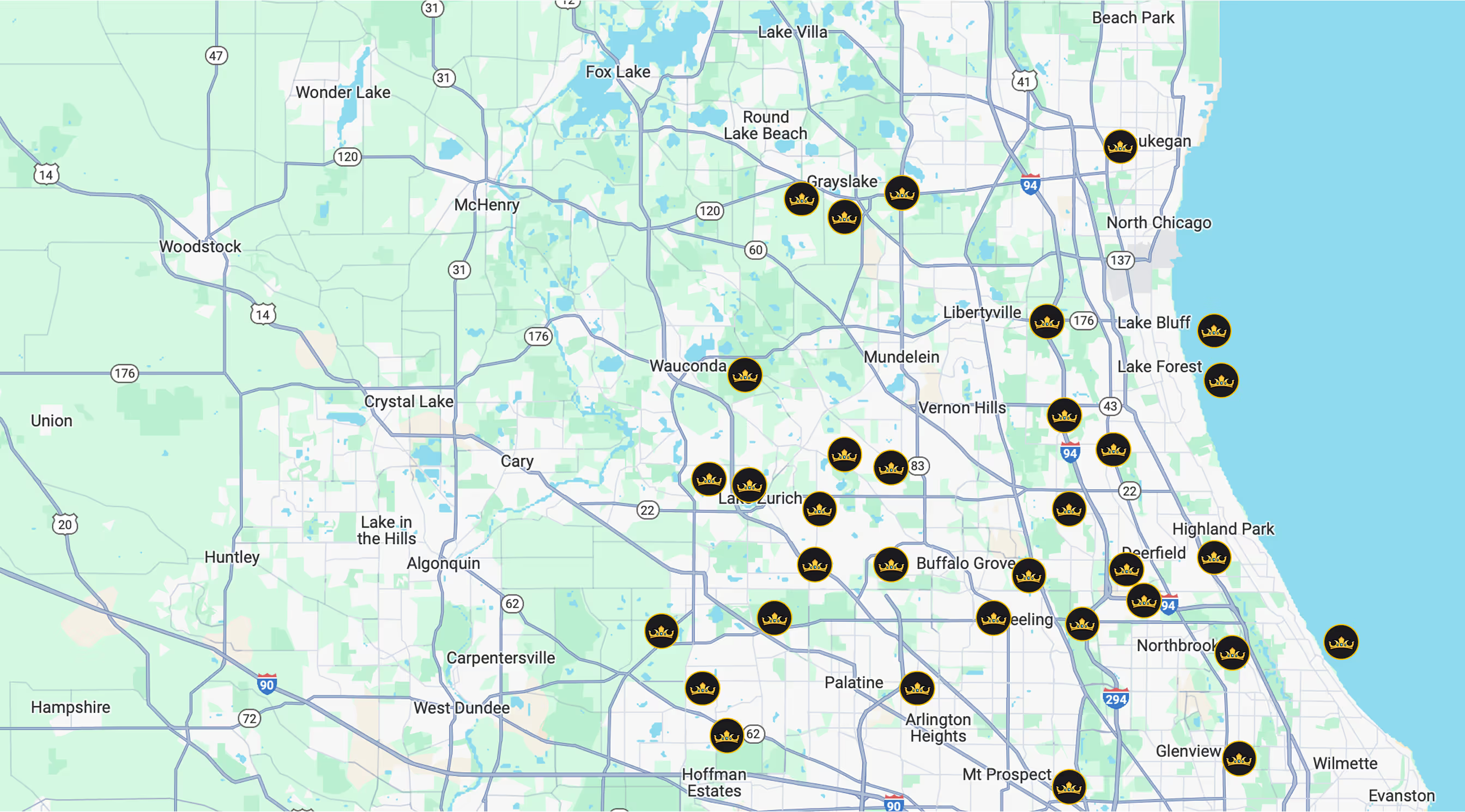
Service areas