Mini Split Heating Repair in Barrington
This page outlines common heating issues for Barrington mini splits, how technicians diagnose and repair them, and safety practices during service. It explains when to repair versus replace, considering age, reliability, and long-term costs, and highlights emergency timelines for cold-weather responses. Readers receive practical maintenance tips to prevent breakdowns, such as filter care and outdoor unit clearance. The guide emphasizes accurate diagnostics, manufacturer guidelines, and energy-efficient decisions to keep Barrington homes warm throughout the season.

Mini Split Heating Repair in Barrington
When your mini split stops producing reliable heat during Barrington winters, it becomes more than an inconvenience; it threatens comfort and can increase energy costs. Mini Split Heating Repair in Barrington focuses specifically on restoring the heating function of ductless systems so homes stay warm and efficient during prolonged cold spells. This page explains common heating problems in mini splits, how technicians diagnose and fix them, safety checks performed during repairs, emergency response expectations in Barrington, and simple guidelines to decide when repair is the smarter choice over replacement.
Why timely mini split heating repair matters in Barrington
Barrington experiences long, cold winters with frequent below-freezing stretches. Mini split systems must manage outdoor coil icing, maintain defrost cycles, and deliver consistent low-ambient heating. Delaying repairs can lead to:
- Reduced indoor comfort and uneven room temperatures
- Higher electric bills from a system running inefficiently
- Greater wear on components that can lead to costly failures
- Potential secondary issues like frozen condensate or blocked airflow
Common heating problems in Barrington mini splits
Homeowners typically call for heating repairs when they notice one or more of these issues:
- Weak heat output: Air blows but it is not warm enough to reach set temperature.
- Frequent or stuck defrost cycles: Unit is repeatedly in defrost mode or never leaves it.
- Outdoor unit icing: Excessive ice buildup on the outdoor coil during cold weather.
- Thermostat or sensor faults: Unit cycles improperly because the indoor sensor or thermostat reads incorrectly.
- Refrigerant leaks or low charge: Insufficient refrigerant leads to poor heating and freezing coils.
- Compressor or reversing valve problems: Components that enable the heating cycle fail or underperform.
- Electrical issues: Faulty capacitors, relays, or wiring cause intermittent operation.
- Poor airflow: Clogged filters, blocked indoor heads, or fan motor issues reduce heat transfer.
Diagnostic procedures used for heating repairs
Effective repair starts with a systematic diagnosis that isolates the cause without unnecessary part replacement. Typical steps include:
- Visual inspection of indoor and outdoor units for ice, debris, and physical damage.
- Check and clean or replace filters and verify unobstructed airflow from indoor heads.
- Measure temperature split and discharge air temperature to determine heat transfer performance.
- Test refrigerant pressures and perform leak detection if pressures are low.
- Monitor defrost cycles and inspect defrost heaters, sensors, and control boards.
- Inspect electrical components: capacitors, contactors, transformers, and wiring continuity.
- Calibrate or test the indoor temperature sensor and thermostat communication.
- Run a full system diagnostic in heating mode at low ambient conditions to replicate the issue.
These steps are performed using industry-standard tools and safe refrigerant-handling practices to ensure accurate diagnosis and code-compliant repairs.
Typical repairs and parts replacement
Once the problem is identified, common repair actions include:
- Refrigerant recharge and leak repair: Locate and repair leaks; recharge to manufacturer charge specifications.
- Defrost heater or sensor replacement: Fixing faulty defrost elements that prevent proper de-icing.
- Compressor or reversing valve repair/replacement: Addressing mechanical failures that stop heat mode from working.
- Circuit board or control replacement: Replacing failed PCBs, relays, or communication modules.
- Fan motor replacement: Restoring proper airflow in indoor or outdoor units.
- Thermostat or sensor replacement/calibration: Ensuring accurate temperature reading and stable cycling.
- Filter, coil cleaning, and condensate drain clearing: Low-cost maintenance that often restores performance.
- Expansion device or solenoid repair: Fixing metering devices that affect refrigerant flow and heat delivery.
Technicians follow manufacturer specifications to preserve system efficiency and reliability. For refrigerant work, certified refrigerant handling and leak-proofing methods are used to meet regulations.
Safety checks performed during heating repairs
Because mini splits operate with high-voltage electricity and pressurized refrigerant, safety checks are essential:
- Verify proper electrical connections and ground integrity.
- Test safety interlocks, sensors, and automatic shutoffs.
- Confirm correct refrigerant pressures to avoid compressor damage.
- Check for refrigerant leaks using approved detection methods.
- Ensure outdoor unit is on a stable, level surface and is free from debris.
- Inspect indoor heads for secure mounting and unobstructed drainage.
Note: Mini splits are electric heating systems and do not produce carbon monoxide. However, electrical hazards and refrigerant safety remain critical.
Emergency response and typical timelines in Barrington
In Barrington winters, rapid response is often necessary. Typical repair timelines are:
- Heating emergency (no heat in freezing conditions): Same-day or within 24 hours when accessible parts are available.
- Urgent but not critical (reduced heat, intermittent operation): 24 to 48 hours.
- Regular service and diagnostics: 48 to 72 hours for routine inspections and scheduled repairs.
Response times can vary depending on parts availability, system age, and local weather. During extreme cold snaps, expect high demand for heating repairs in the Barrington area.
When to repair vs replace a mini split heating system
Make repair decisions based on system age, frequency of failures, and long-term operating cost:
- Repair is often most cost-effective when the unit is under 10 years old, has had infrequent failures, and the repair restores normal heating performance and efficiency.
- Consider replacement if:
- The system is older than 10 to 12 years and uses outdated refrigerant or technology.
- Repairs are frequent or approaching the cost of a new system.
- The unit cannot maintain adequate heat even after repair, or compressor/refrigerant issues recur.
- Upgrading would yield significantly better cold-climate performance or energy savings in Barrington’s long heating season.
Upgrading to a modern cold-climate or hyper-heat mini split can deliver more reliable low-ambient heating, improved efficiency, and better zoning control for Barrington homes.
Preventive maintenance tips to avoid heating breakdowns
Regular maintenance reduces the need for emergency Mini Split Heating Repair in Barrington:
- Clean or replace indoor filters every 1 to 3 months during heavy use.
- Keep outdoor units clear of snow, ice, and debris; maintain 2 to 3 feet of clearance.
- Schedule annual professional tune-ups before winter to inspect refrigerant, defrost operation, and electrical components.
- Monitor indoor heads for unusual noises, odors, or drops in output and address issues early.
ConclusionMini Split Heating Repair in Barrington focuses on restoring reliable heat quickly and safely, accounting for local cold-weather challenges. Proper diagnosis, timely repairs, and routine maintenance preserve comfort and efficiency throughout the long Barrington heating season, and informed decisions about repair versus replacement protect your investment over the long term.

Customer
Testimonials

Great service Very professional
Air Kings was very friendly from start to finish. Very professional and on time. Always communicated with me to keep me informed. I highly recommend them.
Air Kings is a breath of fresh air when working with HVAC companies. Omar was incredibly helpful and polite, offering quality customer service I’ve never seen before. Very easy to talk with Air Kings, I recommend giving them a call!
Brian was super helpful and walked me through everything super nicely as well
Very satisfied
Great service Very professional
Air Kings was very friendly from start to finish. Very professional and on time. Always communicated with me to keep me informed. I highly recommend them.
Air Kings is a breath of fresh air when working with HVAC companies. Omar was incredibly helpful and polite, offering quality customer service I’ve never seen before. Very easy to talk with Air Kings, I recommend giving them a call!
Omar & team are great HVAC experts! They explain what they are doing and are always professional. Great techs that know what they are doing and reasonable prices.


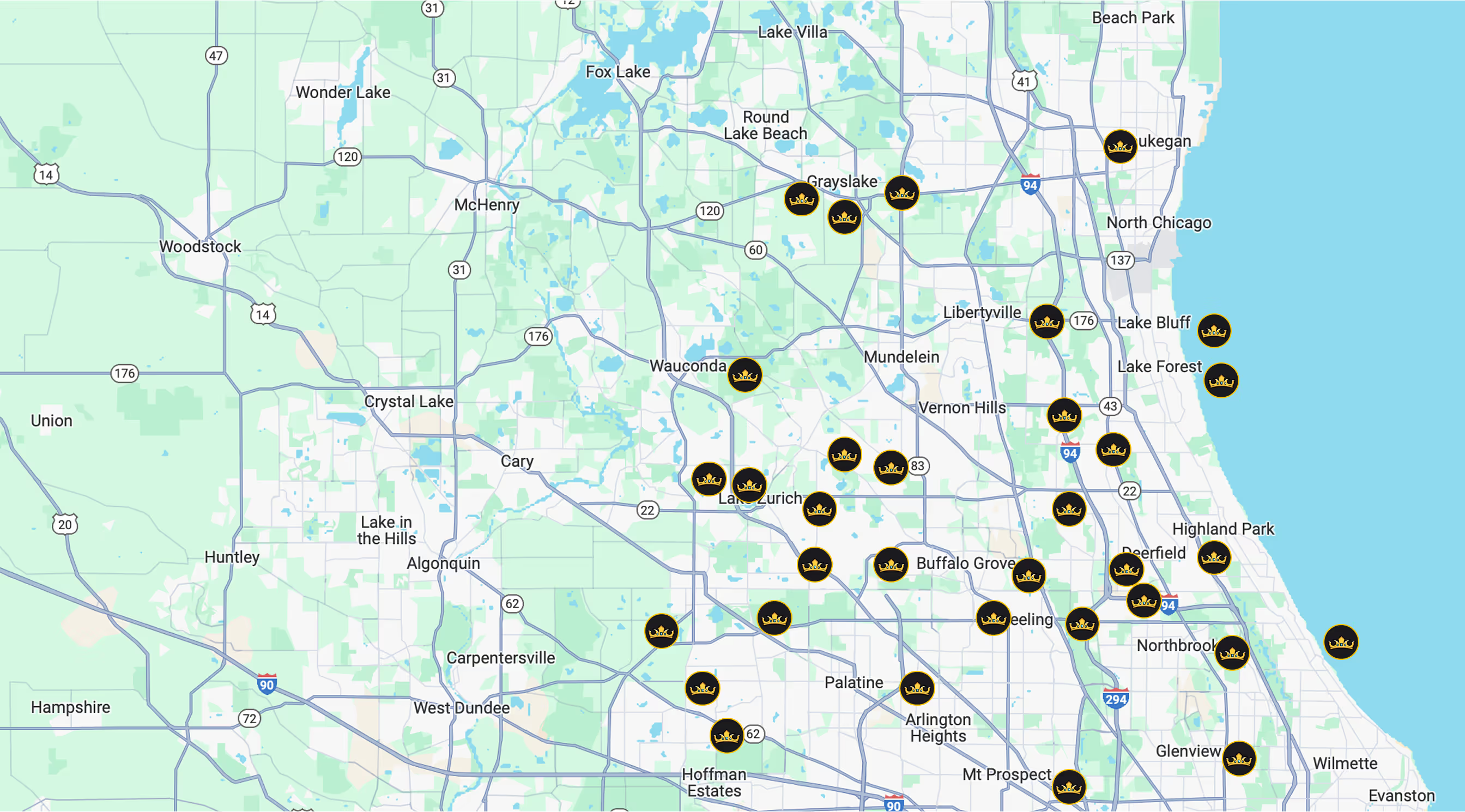
Service areas