Whole House Air Purification in Lake Forest
Maintaining clean indoor air is essential for comfort and health in Lake Forest homes. Whole-house air purification systems treat the air circulated through your HVAC system, ensuring every room benefits by reducing allergens, odors, particulate matter, microbes, and common household volatile organic compounds (VOCs). This page covers the main purification technologies (HEPA, activated carbon, UV, bipolar ionization), HVAC integration, the types of contaminants these systems remove, installation and sizing considerations, maintenance schedules, and the certifications and performance metrics to consider when selecting a system.
-min.avif)
Whole House Air Purification in Lake Forest
Keeping indoor air clean is essential for comfort and health in Lake Forest homes. Whole house air purification systems treat the air circulated through your HVAC system so every room benefits, reducing allergens, odors, particulate pollution, microbes, and common household volatile organic compounds. This page explains the main purification technologies (HEPA, activated carbon, UV, bipolar ionization), how they integrate with existing HVAC, what contaminants you can expect to remove, installation and sizing considerations, maintenance schedules, and the certifications and performance metrics you should look for when choosing a system.
Why whole house air purification matters in Lake Forest
Lake Forest experiences seasonal pollen, variable humidity, and indoor pollutant sources from cooking, cleaning products, and everyday materials. Many homes are tightly sealed for energy efficiency, which can trap pollutants indoors. A properly sized whole-house system reduces overall exposure to triggers that worsen allergies and asthma and improves comfort during high pollen seasons or periods when outdoor air quality is poor.
Types of whole house air purification and what they do
- HEPA (High Efficiency Particulate Air)
- Removes fine particles such as pollen, pet dander, dust mites, and many smoke particles.
- Industry standard: filters meeting HEPA criteria capture 99.97% of particles at 0.3 microns.
- Typically installed as in-duct or at the air handler with appropriate fan capacity to overcome added pressure drop.
- Activated carbon
- Adsorbs odors, many volatile organic compounds (VOCs), and gaseous pollutants.
- Best when combined with particle filtration; performance depends on carbon type, bed depth, and contaminant concentration.
- UV-C germicidal irradiation
- Targets microbes: bacteria, viruses, and mold spores.
- Effectiveness depends on UV dose and exposure time; properly designed lamps in the airstream or on the coil reduce microbial growth and improve coil hygiene.
- Bipolar ionization / needlepoint ionization
- Produces ions that attach to particles and some gases, promoting agglomeration and removal by the filter.
- Performance varies by manufacturer and configuration; select systems verified by independent third-party testing and compliant with local ozone limits.
How whole-house systems integrate with existing HVAC
- In-duct placement: Most whole-house purifiers are mounted in the return duct, the HVAC air handler, or the plenum so the purifier treats all air before distribution.
- Fan and static pressure: High-efficiency filtration (HEPA or high-MERV) increases static pressure. Your blower motor must be able to maintain required airflow (CFM) or a dedicated bypass or booster fan will be necessary.
- Zoned systems: If your home has zoning, ensure the purifier is placed where treated air can reach all zones, commonly at the central return or air handler.
- Combined approaches: The most effective installations pair particle filtration (HEPA or high-MERV) with gas-phase treatment (activated carbon) and microbial control (UV) for comprehensive coverage.
Benefits for allergy and asthma sufferers
- Reduces airborne triggers: HEPA-level filtration cuts pollen, pet dander, and dust mite fragments that cause allergic reactions.
- Lowers particulate load: In homes with indoor/outdoor smoke or during high pollen days, whole-house filtration reduces overall particulate concentrations.
- Complements medical care: While not a cure, targeted air cleaning reduces exposures that can lead to symptoms or attacks, improving day-to-day control for many people with asthma or allergies.
Expected contaminant removal and realistic outcomes
- Particles: HEPA-capable systems capture the vast majority of particles 0.3 microns and larger; properly sized whole-house systems markedly lower airborne particulate counts throughout the home.
- Gases and odors: Activated carbon reduces many common household VOCs and odors; effectiveness depends on carbon quantity and pollutant load. Strong or continuous sources require deeper carbon beds or source control.
- Microbes: UV-C devices can achieve multi-log reductions for susceptible organisms within the treated airstream when designed to provide sufficient UV dose. They are most effective as part of a multi-layer strategy.
- Performance varies with airflow, filter age, source strength, and system design. Expect significant reduction in triggers, but not complete elimination of all contaminants.
Installation and sizing guidance
- Size by airflow and home volume: Whole-house systems are sized by the HVAC system’s airflow (CFM) and the home’s volume to ensure adequate air changes per hour.
- Match filtration to the system: If selecting HEPA-level filtration, confirm your HVAC can handle the pressure differential or plan for a dedicated solution to avoid reduced airflow and comfort issues.
- Placement matters: Install upstream of the blower (return side) or at the air handler so all circulated air passes through the purifier.
- Professional assessment: A qualified HVAC professional will evaluate your ductwork, blower capability, and pollutant priorities to recommend a configuration (in-duct HEPA, add-on fan-powered purifier, combination HEPA + carbon + UV, etc.) that balances efficiency and performance.
Maintenance and filter replacement schedules
- Pre-filters: Inspect monthly; replace or clean every 1–3 months depending on dust load.
- HEPA/in-duct filters: Replace typically every 12–18 months; high-use or smoky environments may require more frequent changes.
- Activated carbon: Replace every 3–12 months depending on odor/VOC exposure and carbon bed size; heavy contaminants shorten life.
- UV lamps: Replace annually or per manufacturer guidance; lamp output falls off with time even if the lamp remains lit.
- Electronic collectors: Clean collectors per manufacturer guidance (often monthly to quarterly).
- Annual inspection: Have airflow, static pressure, and system performance checked yearly to maintain efficiency and indoor air quality.
Certifications and performance metrics to check
- HEPA standard: Look for verified HEPA performance (99.97% at 0.3 microns).
- MERV / ASHRAE 52.2: MERV ratings indicate particle capture efficiency; whole-house filter upgrades often reference MERV 13–16 for strong particle removal without excessive pressure drop.
- ISO 16890: Modern filtration standard describing particle capture across size fractions (ePM1/ePM2.5).
- CADR / AHAM: Clean Air Delivery Rate is useful for portable units; in-duct systems use CFM and system effectiveness metrics.
- UL and CARB: UL certifications (UL 2998 for zero ozone claims, UL 867 for electrostatic cleaners) and CARB listing where applicable indicate safety and low ozone emissions. Verify ionization systems meet local ozone regulations.
- Third-party testing: Prefer systems with independent lab data or peer-reviewed performance verification.
Practical maintenance tips and realistic expectations
- Combine strategies: Filtration works best with source control (reducing VOC sources), humidity control, and regular cleaning to limit settled dust resuspension.
- Monitor changes: Track symptom improvement and, if desired, use a particle counter to quantify reduction in PM2.5 or PM10 after installation.
- Expect seasonal variation: Pollen seasons and outdoor pollution events will influence in-home levels; a whole-house system reduces overall exposure but will not completely isolate indoor air from strong outdoor events without additional measures (e.g., temporary ventilation changes).
- Plan for longevity: Regular maintenance preserves performance, protects the HVAC system, and delivers the health benefits that make whole-house purification a long-term investment in home comfort.
Whole house air purification in Lake Forest can substantially improve indoor air quality and reduce exposure to common regional triggers when the system is professionally specified, correctly integrated with your HVAC, and routinely maintained. Choose technologies and certifications that match your household needs—particulate burden, odors/VOCs, and microbial concerns—and maintain the system on the schedules outlined to preserve performance and health benefits.

Customer
Testimonials

Great service Very professional
Air Kings was very friendly from start to finish. Very professional and on time. Always communicated with me to keep me informed. I highly recommend them.
Air Kings is a breath of fresh air when working with HVAC companies. Omar was incredibly helpful and polite, offering quality customer service I’ve never seen before. Very easy to talk with Air Kings, I recommend giving them a call!
Brian was super helpful and walked me through everything super nicely as well
Very satisfied
Great service Very professional
Air Kings was very friendly from start to finish. Very professional and on time. Always communicated with me to keep me informed. I highly recommend them.
Air Kings is a breath of fresh air when working with HVAC companies. Omar was incredibly helpful and polite, offering quality customer service I’ve never seen before. Very easy to talk with Air Kings, I recommend giving them a call!
Omar & team are great HVAC experts! They explain what they are doing and are always professional. Great techs that know what they are doing and reasonable prices.


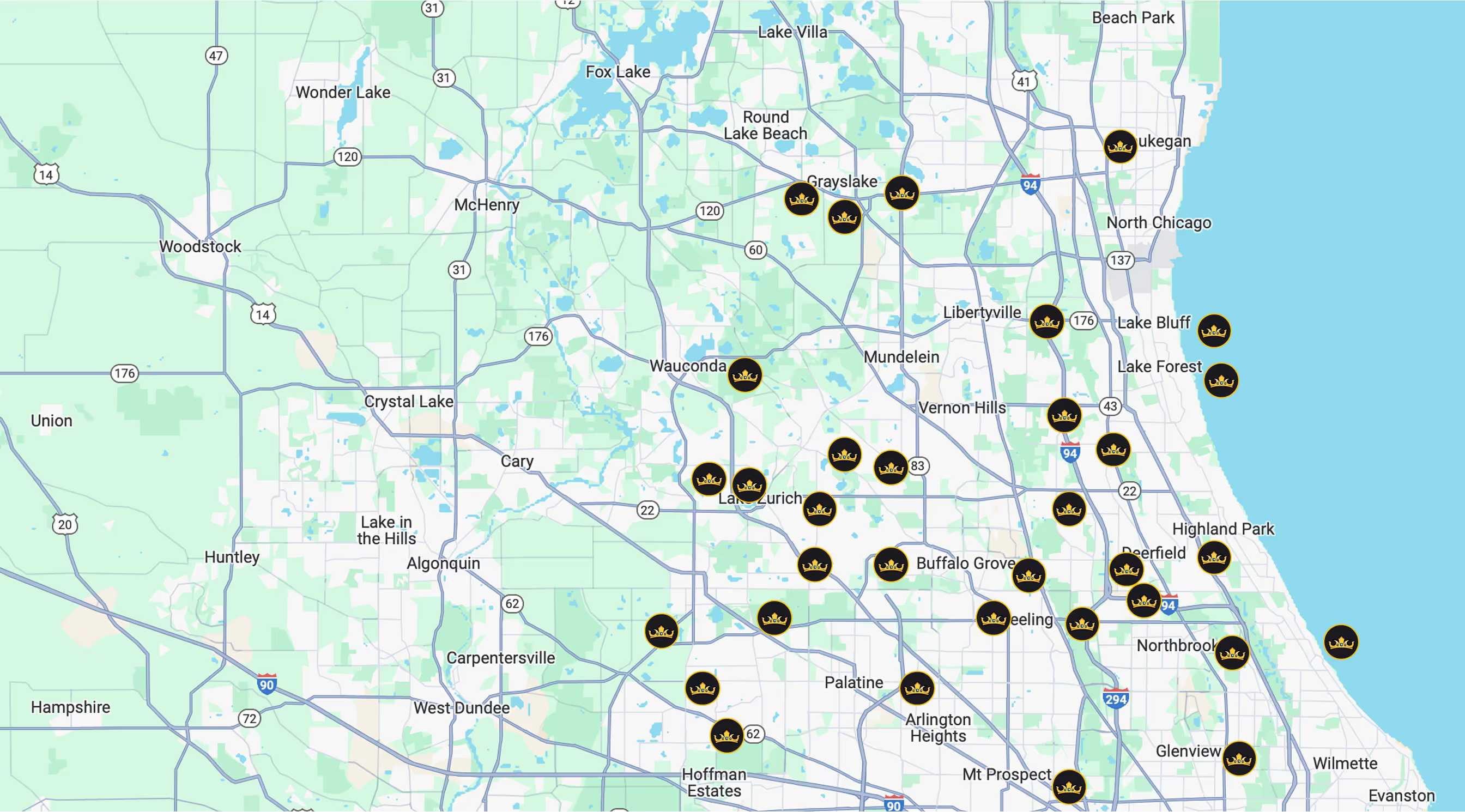
Service areas