Heat Pump Installation in Round Lake
Heat pump installation in Round Lake outlines a comprehensive, end-to-end process from initial site evaluation to commissioning. The guide covers system options (air-source, ducted central, mini-split, and hybrid solutions), load calculations, ductwork and wiring considerations, and critical best practices for outdoor and indoor unit placement. It explains warranty steps, post-install maintenance, and a typical project timeline, emphasizing cold-weather performance, energy efficiency, and precise sizing to achieve reliable year-round comfort in Round Lake homes. This overview helps homeowners plan, budget, and select the right system.
-min.jpg)
Heat Pump Installation in Round Lake
Switching to a heat pump is one of the most effective ways to improve year-round comfort and reduce energy use in Round Lake homes. With cold Midwestern winters and humid summers, properly sized and installed heat pumps deliver efficient cooling in summer and cost-effective heating in shoulder seasons. This page explains the full new heat pump installation process for Round Lake properties: what to expect from the initial consultation through commissioning, common installation types (air-source and mini-split), ductwork and line-set requirements, best practices, warranty steps, maintenance recommendations, and realistic project timelines.
Why a heat pump makes sense in Round Lake
- Round Lake sees wide temperature swings between winter and summer. Modern cold-climate air-source heat pumps and multi-zone mini-splits can provide dependable heating well below freezing, often reducing reliance on fossil fuel backup.
- Heat pumps provide both heating and cooling in a single system, simplifying seasonal comfort.
- Properly selected units with higher HSPF/SEER ratings perform better in cold winters and hot summers common to the area.
Common heat pump options for Round Lake homes
- Air-source heat pumps (central ducted): Works with existing ductwork to heat and cool the whole house. Best when ductwork is in good condition and sized correctly.
- Mini-split (ductless) systems: Excellent for additions, finished basements, older homes without ducts, or for targeted room-by-room control. Offers high efficiency and flexible installation.
- Hybrid / dual-fuel systems: Pair a heat pump with a gas or oil furnace for backup during extremely cold spells. Useful where extreme low temps are frequent.
Typical problems a new installation solves
- Inefficient or failing furnace/AC systems
- Uneven heating and cooling due to old or leaky ductwork
- High energy bills from aging equipment
- Need for zoned temperature control or home additions without ductwork
Initial consultation and site inspection
A successful installation begins with a detailed on-site evaluation:
- Walk-through of the home to evaluate living spaces, insulation levels, attic and basement conditions, existing ductwork, and electrical panel capacity.
- Review of homeowner goals: whole-house comfort, individual zone control, or budget and equipment preferences (air-source vs mini-split).
- Collection of measurements and photos to support load calculations and equipment placement planning.
- Discussion of placement constraints (outdoor unit location, noise considerations, line-set routing, and indoor unit placement).
Load calculations and equipment selection
Proper sizing is critical. Installers use established methods (typically a Manual J load calculation) to determine heating and cooling loads based on:
- Square footage, ceiling heights, insulation levels, window types and orientations, air infiltration, and local climate.
- Results determine capacity (tonnage) and the most efficient model for your home. Oversizing leads to short cycling and humidity issues; undersizing leaves you under-conditioned during extremes.Key selection factors:
- Efficiency ratings: SEER for cooling, HSPF/SCOP for heating — higher is better for long-term savings.
- Cold-weather performance: Choose models with proven low-temperature performance and reliable defrost cycles for Round Lake winters.
- Zoning needs: Central systems vs multi-zone mini-splits based on the home layout and comfort goals.
Ductwork, line-sets, and electrical requirements
- Ductwork: Central systems require duct inspection and often repairs or sealing to meet airflow requirements. Insulated, sealed ducts improve performance and comfort.
- Line-sets and refrigerant piping: Mini-splits and air-source units need properly sized copper line-sets routed between indoor and outdoor units. Proper routing, protection, and insulation prevent performance loss.
- Electrical: Heat pumps typically require a dedicated circuit and may need panel upgrades depending on the existing electrical capacity. Safety standards and local codes determine final electrical scope.
- Permits and inspections: Local permits are usually required; professional installers handle permit submission and coordinate municipal inspections.
Installation best practices
- Follow manufacturer installation manuals and local code requirements.
- Proper outdoor unit placement: level, elevated to prevent snow accumulation, with adequate airflow and noise consideration for neighbors.
- Indoor unit placement: optimized for airflow, access for maintenance, and effective distribution.
- Refrigerant handling: vacuuming, pressure testing, correct charge by weight or superheat/subcooling method, and leak checks by certified technicians.
- Weatherproofing and sealing of exterior wall penetrations and line-set runs.
Commissioning and performance testing
After physical installation, thorough commissioning ensures efficient, reliable operation:
- Verify correct refrigerant charge and pressures for seasonal conditions.
- Measure airflow, static pressure, and temperature rise/drop across the coil.
- Test electrical connections, startup sequences, safety controls, and thermostat calibration.
- Run cooling and heating cycles, including defrost, to confirm consistent performance and quiet operation.
- Provide a system walkthrough showing homeowner controls, filters, and basic troubleshooting.
Warranty and registration
- Manufacturers provide different warranty terms on compressors, parts, and sometimes labor. Confirm specifics before installation.
- Register the equipment per manufacturer instructions to activate warranties and maintain eligibility for extended coverage when available.
- Keep records: installation date, model and serial numbers, and commissioning reports for future service and warranty claims.
Post-installation maintenance recommendations
Regular care keeps a heat pump operating efficiently and extends service life:
- Replace or clean filters every 1–3 months depending on use and filter type.
- Annual professional tune-up before heating season: inspect coils, clean condensate lines, verify refrigerant levels, and test electrical components.
- Keep outdoor units clear of debris, snow, and vegetation. Maintain 2–3 feet clearance for airflow.
- Monitor performance: unexpected increases in cycling, unusual noises, or higher energy use warrant prompt evaluation.
Expected timeline
While each project varies by home complexity, a typical installation timeline for Round Lake residences is:
- Initial consultation and site inspection: 1 visit (1–2 hours)
- Load calculation, equipment selection, permit submission: 3–7 days (varies by permit processing)
- Installation (central or single-zone mini-split): 1–3 days for standard jobs; multi-zone mini-splits or ductwork upgrades may take 2–5 days
- Commissioning and final testing: same day as installation completion
- Final inspection (if required by local jurisdiction): scheduling depends on the inspector but generally within 1–2 weeks
Final considerations for Round Lake homeowners
Heat pump installation in Round Lake requires attention to the local climate and home characteristics. Choose equipment with proven cold-weather performance, ensure accurate load calculations, and confirm that ductwork and electrical systems meet the new system’s needs. Proper commissioning and regular maintenance will deliver reliable comfort through cold winters and humid summers. With the right planning and professional installation practices, a heat pump can be a durable, efficient solution for year-round comfort in Round Lake homes.

Customer
Testimonials

Great service Very professional
Air Kings was very friendly from start to finish. Very professional and on time. Always communicated with me to keep me informed. I highly recommend them.
Air Kings is a breath of fresh air when working with HVAC companies. Omar was incredibly helpful and polite, offering quality customer service I’ve never seen before. Very easy to talk with Air Kings, I recommend giving them a call!
Brian was super helpful and walked me through everything super nicely as well
Very satisfied
Great service Very professional
Air Kings was very friendly from start to finish. Very professional and on time. Always communicated with me to keep me informed. I highly recommend them.
Air Kings is a breath of fresh air when working with HVAC companies. Omar was incredibly helpful and polite, offering quality customer service I’ve never seen before. Very easy to talk with Air Kings, I recommend giving them a call!
Omar & team are great HVAC experts! They explain what they are doing and are always professional. Great techs that know what they are doing and reasonable prices.


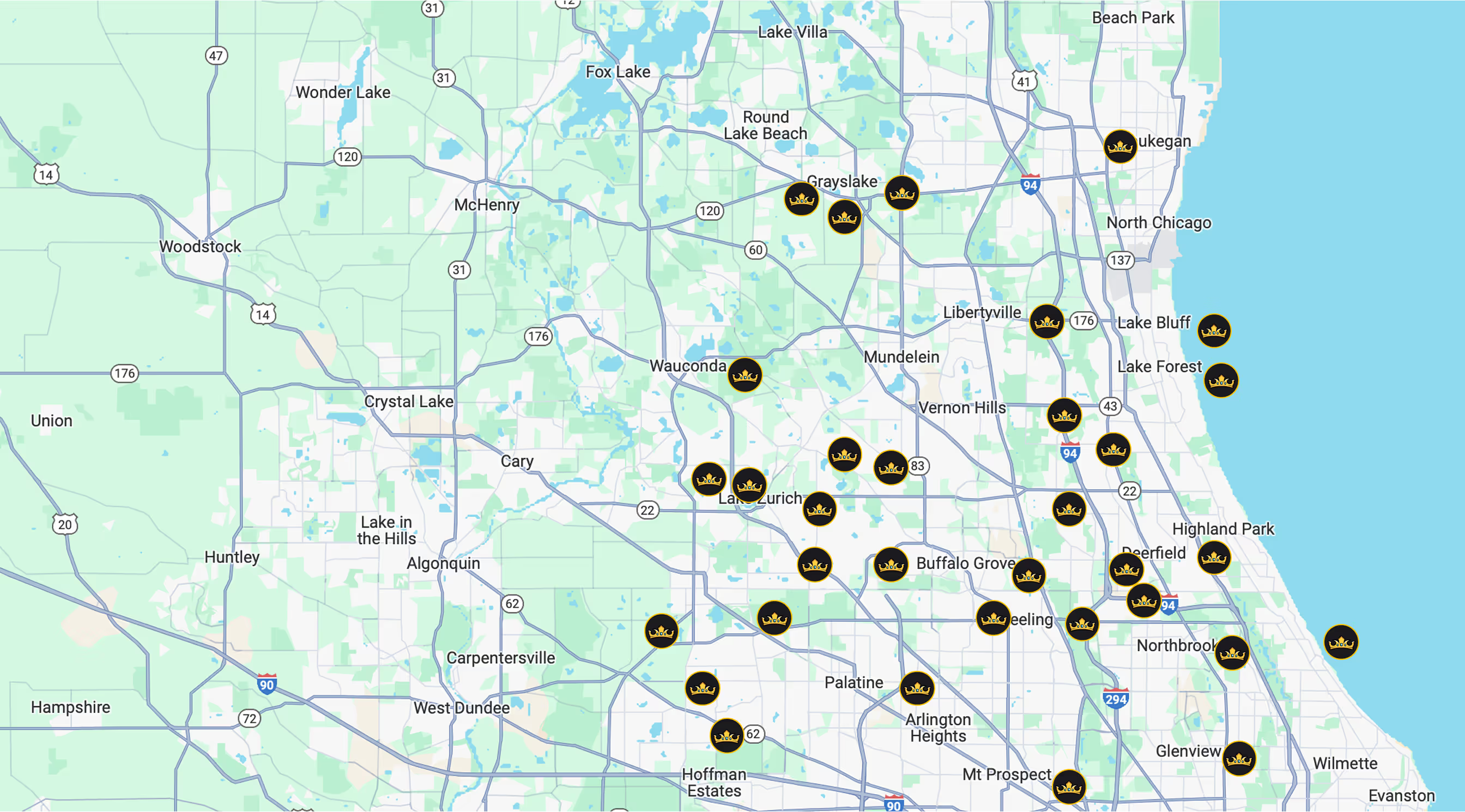
Service areas